



Canterbury Bells Plant: A Guide to Growing and Caring for These Beautiful Flowers
Canterbury Bells, also known by their botanical name Campanula medium, are a popular garden plant that produces beautiful bell-shaped flowers in shades of blue, purple, pink, and white. These biennial plants are native to Europe and have been cultivated for centuries for their charming blooms and easy-to-grow nature. In this article, we will explore the history of the Canterbury Bells plant, how to grow and care for them in your garden, and some tips for ensuring they thrive.
History of the Canterbury Bells Plant
Canterbury Bells have a long and storied history, with records of their cultivation dating back to the 16th century. The name Canterbury Bells is said to have originated from an old English legend that tells of how the flowers were used to adorn the gardens of Canterbury Cathedral. The plant was also a favorite of English cottage gardeners, who appreciated its delicate, bell-shaped flowers and easy-going nature.
In the wild, Canterbury Bells can be found growing in meadows and woodlands throughout Europe. They were first introduced to gardens in the 16th century and quickly became popular for their vibrant blooms and tall, elegant stems. Today, Canterbury Bells are still a favorite among gardeners for their old-fashioned charm and versatility in the garden.
Growing Canterbury Bells
Canterbury Bells are relatively easy to grow and can be started from seed or purchased as seedlings from a nursery. They prefer a sunny or partially shaded location with well-draining soil. Plant your Canterbury Bells in the spring after the last frost has passed, spacing them about 12 inches apart. These plants can grow up to 3 feet tall, so be sure to provide support for them as they grow.

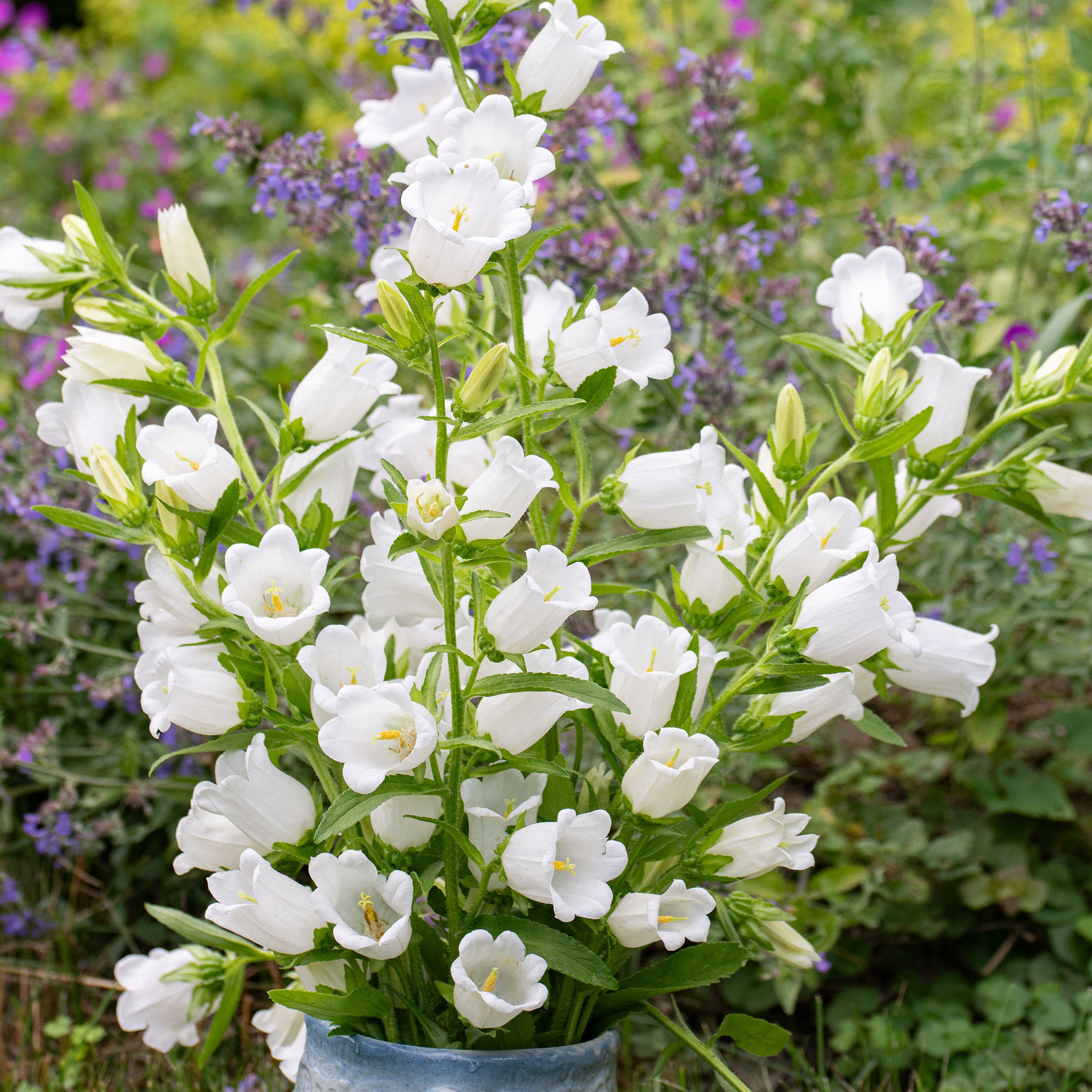
Water your Canterbury Bells regularly, keeping the soil evenly moist but not waterlogged. Fertilize them with a balanced fertilizer once a month to encourage healthy growth and abundant blooms. Deadhead spent flowers to promote continuous blooming throughout the growing season.
Caring for Canterbury Bells
Once established, Canterbury Bells require minimal care to thrive. They are relatively pest and disease-resistant, making them a low-maintenance addition to any garden. However, there are a few key things to keep in mind to ensure your plants stay healthy and happy.
Prune back any dead or damaged growth in the fall to tidy up the plant and encourage new growth in the spring. Mulch around the base of the plant to help retain moisture and suppress weeds. In colder climates, you may need to protect your Canterbury Bells from frost by covering them with a layer of mulch or bringing them indoors during the winter months.
Tips for Growing Healthy Canterbury Bells
– Choose a well-draining soil and a sunny or partially shaded location for your Canterbury Bells.
– Water your plants regularly to keep the soil evenly moist.
– Fertilize your Canterbury Bells once a month with a balanced fertilizer.
– Deadhead spent flowers to promote continuous blooming.
– Prune back any dead or damaged growth in the fall.
– Mulch around the base of the plant to retain moisture and suppress weeds.
– Protect your Canterbury Bells from frost in colder climates.
In Conclusion
Canterbury Bells are a beloved garden plant that adds a touch of old-fashioned charm to any landscape. With their stunning bell-shaped flowers and easy-to-grow nature, they are a favorite among gardeners of all skill levels. By following the tips and guidelines outlined in this article, you can enjoy a bountiful display of Canterbury Bells in your own garden. So why not add these beautiful flowers to your garden this season and enjoy their beauty for years to come?


